
Explainer · July 20, 2026 · 7 min · By Davion Mercer
Dark Circles in Deeper Skin Tones: What Actually Lightens Under-Eye Pigment
Periorbital hyperpigmentation is more common and more visible in medium to deep skin, and it responds to a different playbook than a shadow or a vein. Here is what the evidence says lightens under-eye pigment, and what quietly makes it worse.
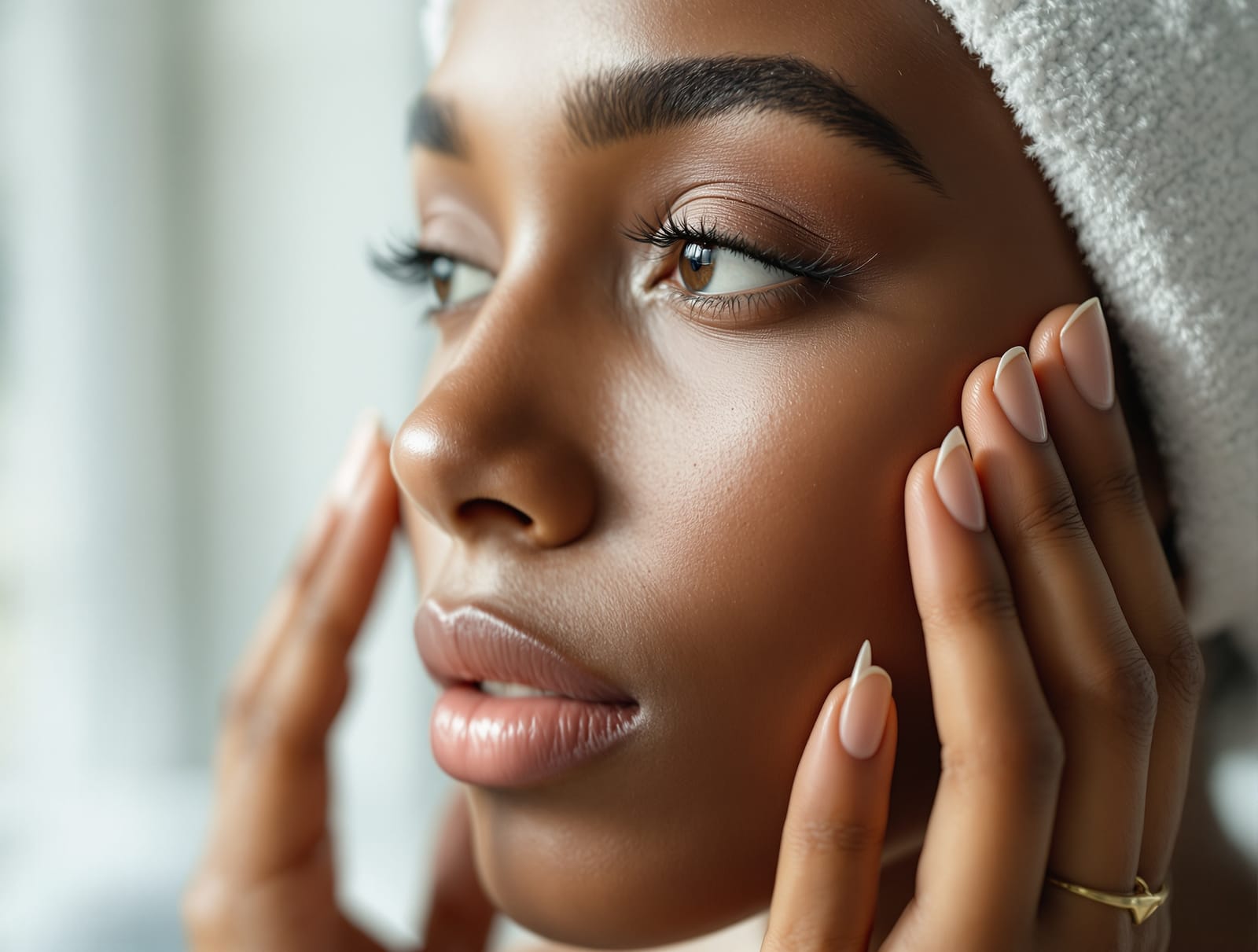
If you have brown or deep skin and stubborn under-eye darkness that looks the same in every light, you are almost certainly dealing with pigment rather than a shadow or a vein. Dermatologists call it periorbital hyperpigmentation, and it behaves differently from the other kinds of dark circle in one important way: the color is melanin sitting in the skin, so the fix has to act on melanin. That sounds obvious, but it is exactly where most people go wrong, spending money on caffeine gels and cold compresses that were designed for a completely different problem. Here is what the evidence supports for lightening under-eye pigment, why deeper skin tones need a more careful approach, and the small habits that undo good work.
Why pigment circles are more common in deeper skin. Melanocytes, the cells that make pigment, are more reactive in medium and deep skin. They respond to sun, friction, and inflammation by producing more melanin, and the thin skin around the eye shows that pigment readily. A widely cited review of periorbital hyperpigmentation lists constitutional or genetic pigmentation, sun exposure, and advancing age among the main drivers, and notes the condition is especially prevalent in people with darker skin phototypes and in certain ethnic groups (NCBI). None of that means the darkness is permanent. It means the right lever is pigment control, applied patiently, and paired with relentless protection against the things that keep switching the pigment back on.
First, confirm it is actually pigment. Before buying anything, sort your circle into one of the three kinds of dark circles. Pigment-type circles are brown rather than bluish, they look roughly identical no matter how you tilt your head or where the light falls, and they often extend slightly onto the lid or upper cheek. If gently stretching the skin makes the darkness fade, or if it looks far better in light coming from the front rather than overhead, you are dealing with a structural shadow, and no brightening cream will move it. Getting this right matters even more in deeper skin, because the wrong aggressive treatment can leave you worse off than you started.
Sun protection is the treatment, not the afterthought. For pigment circles, daily broad-spectrum sunscreen is not optional polish, it is the foundation everything else is built on. Ultraviolet and even visible light drive melanocytes to make more pigment, and reactive skin needs less provocation to do so. This is covered in depth in our piece on whether the sun causes dark circles, but the short version is this: tinted mineral sunscreens containing iron oxides are particularly useful in deeper skin, because iron oxides help block the visible light that plain zinc and titanium formulas miss, and visible light is a meaningful trigger for pigment in darker phototypes. Skipping sunscreen while treating pigment is like bailing a boat without plugging the leak.
Topicals that genuinely fade under-eye pigment. The active ingredients with the best track record work by interrupting melanin production or speeding the turnover of pigmented cells. The American Academy of Dermatology notes that treating dark spots takes months of consistent use and that sun protection is essential for any of it to hold (AAD). Reasonable evidence-backed options for the delicate eye area include azelaic acid, vitamin C, niacinamide, and kojic acid, all of which are gentler than the harsher acids and generally well tolerated near the eye. Retinoids can help by accelerating cell turnover and thickening skin over time, but they are also the most likely to irritate, and in deeper skin irritation itself can trigger fresh post-inflammatory pigmentation. The safe path is to start low, apply a small amount a few nights a week, and build up slowly. Prescription lighteners such as hydroquinone can be effective for periorbital pigment but belong under a clinician's supervision, because misuse carries its own pigment risks.
When topicals are not enough: procedures, carefully. For pigment that will not budge, in-office options exist, but the risk calculus is different in deeper skin. Certain lasers and energy devices for under-eye pigment and superficial chemical peels for under-eye darkness can lighten stubborn melanin, yet both can paradoxically cause post-inflammatory hyperpigmentation if the settings or depth are wrong for the skin type. A study quantifying risk factors for periorbital hyperpigmentation grouped modifiable contributors such as sun exposure and eye rubbing alongside constitutional factors, reinforcing that reducing provocation matters as much as any device (NCBI). The practical rule: for medium to deep skin, seek a clinician who treats your skin tone routinely, expect conservative settings and test spots, and be wary of any clinic that promises a fast, one-session fix.
The habits that quietly keep pigment going. Two everyday behaviors sabotage more under-eye lightening plans than any product choice. The first is rubbing. Chronic eye rubbing, often driven by untreated allergies, creates low-grade inflammation that feeds melanin production, so managing allergies and keeping hands off the area is genuine treatment, not just advice. The second is impatience: pigment fades on the order of months, and stopping at week three because nothing has visibly changed is the most common reason people conclude, wrongly, that treatment does not work.
What to do while you wait. Because real fading is slow, cosmetic camouflage has an honest role here. A peach or orange-toned corrector neutralizes brown pigment far better than a flesh-toned concealer, a technique explored in makeup versus treatment for dark circles. Using it buys confidence during the months your topicals are doing their slow work, and there is nothing second-rate about that.
The takeaway. Periorbital hyperpigmentation is one of the most treatable kinds of dark circle, but only if you treat it as a pigment problem: confirm the type, protect against sun and visible light every single day, use gentle evidence-backed brighteners consistently for months, and add procedures only in experienced hands attuned to deeper skin. Do the boring parts well and the pigment usually lifts. Chase it with the wrong tools and it stays exactly where it is.
Related reading: The three kinds of dark circles, and why it matters and Lasers and energy devices for under-eye pigment.